Overhead Lights Off by 8 PM
Bright overhead fixtures send a strong alertness signal. Switching to table lamps or floor lamps from early evening creates a naturally dimmer atmosphere without any effort.
Small, considered changes to your physical space can meaningfully shift the tone of your evenings — making the transition away from screens feel natural rather than forced.
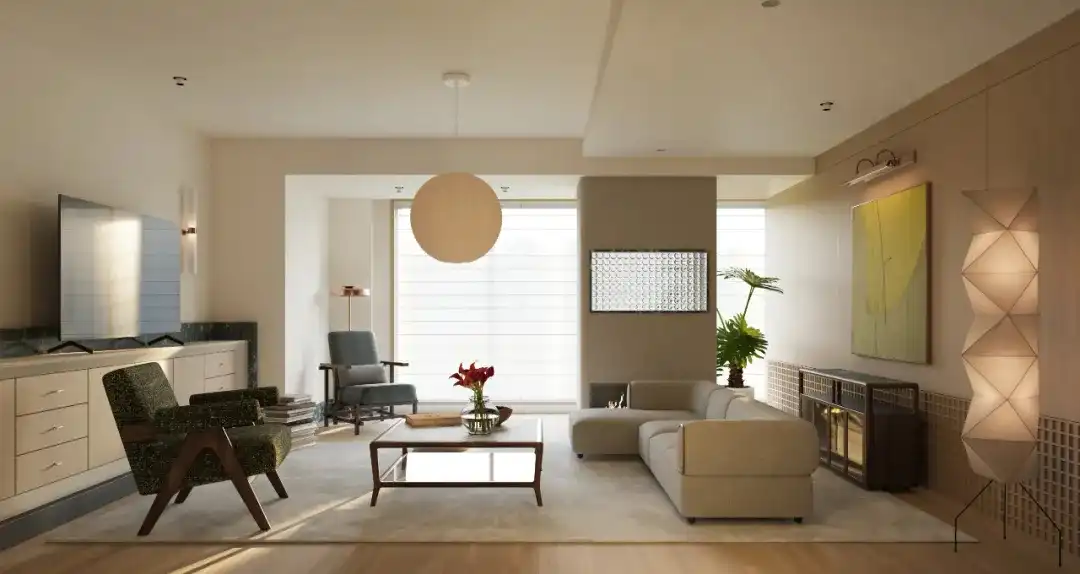
The physical environment you inhabit during the last hours of the day plays a steady, quiet role in how easily you move away from screens. Clutter, bright overhead lights, and devices within easy reach all extend the pull of the digital world into the time you need for transition.
This guide outlines a set of practical adjustments — not rigid rules — that can help your space feel more conducive to a calm, unhurried evening.
Pair with the Evening ProgramLight is one of the most consistent influences on your sense of time and alertness. How you manage it from early evening onward shapes the rest of your night.
Bright overhead fixtures send a strong alertness signal. Switching to table lamps or floor lamps from early evening creates a naturally dimmer atmosphere without any effort.
Bulbs in the 2700K–3000K range produce a warmer, amber-tinted light that often feels softer than daylight-spectrum alternatives. Many people find this a low-effort way to change how bright the room feels after dark.
All major devices offer a warm display mode that reduces blue-spectrum output. Scheduling this to activate automatically from late afternoon takes it off your mental list entirely.
Where you place your devices determines how easy it is to reach for them out of habit. Distance is one of the simplest and most effective forms of boundary-setting.
Charging your phone outside the bedroom removes the most accessible source of late-night screen time without requiring any willpower in the moment.
If a television or monitor is visible from bed, its presence can be an unconscious invitation. Repositioning it, or simply turning it to face away, reduces that low-level pull.
Replacing the habit of checking your phone for the time with a simple bedside clock removes the most common reason for picking up a device at night.
A small tray or dock in the hallway or living room becomes a consistent drop-off point for all devices at a set time — turning an intention into a spatial habit.
The Evening Screen Program pairs directly with your environment setup to create a complete, phased approach to reducing screen time before bed.